
Automatic litter care, made simple
Skip the daily scoop.
Keep the clean routine.
A self-cleaning litter box designed to separate waste automatically after use — so the box stays easier to maintain and your home feels fresher.
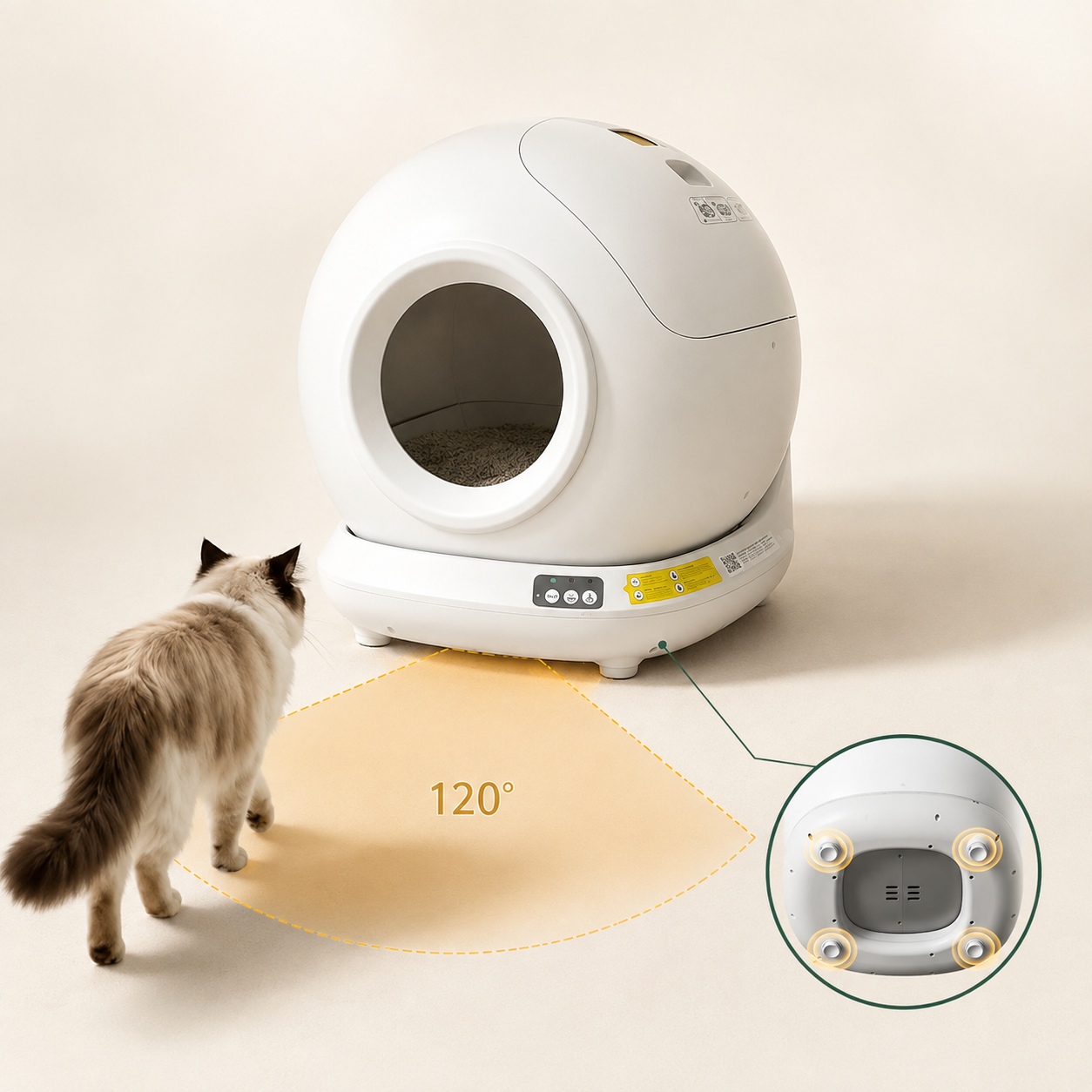
Fully enclosed chamber, 120° radar sensing, weight detection and anti-paw-pinch structure — the cycle pauses when your cat approaches.
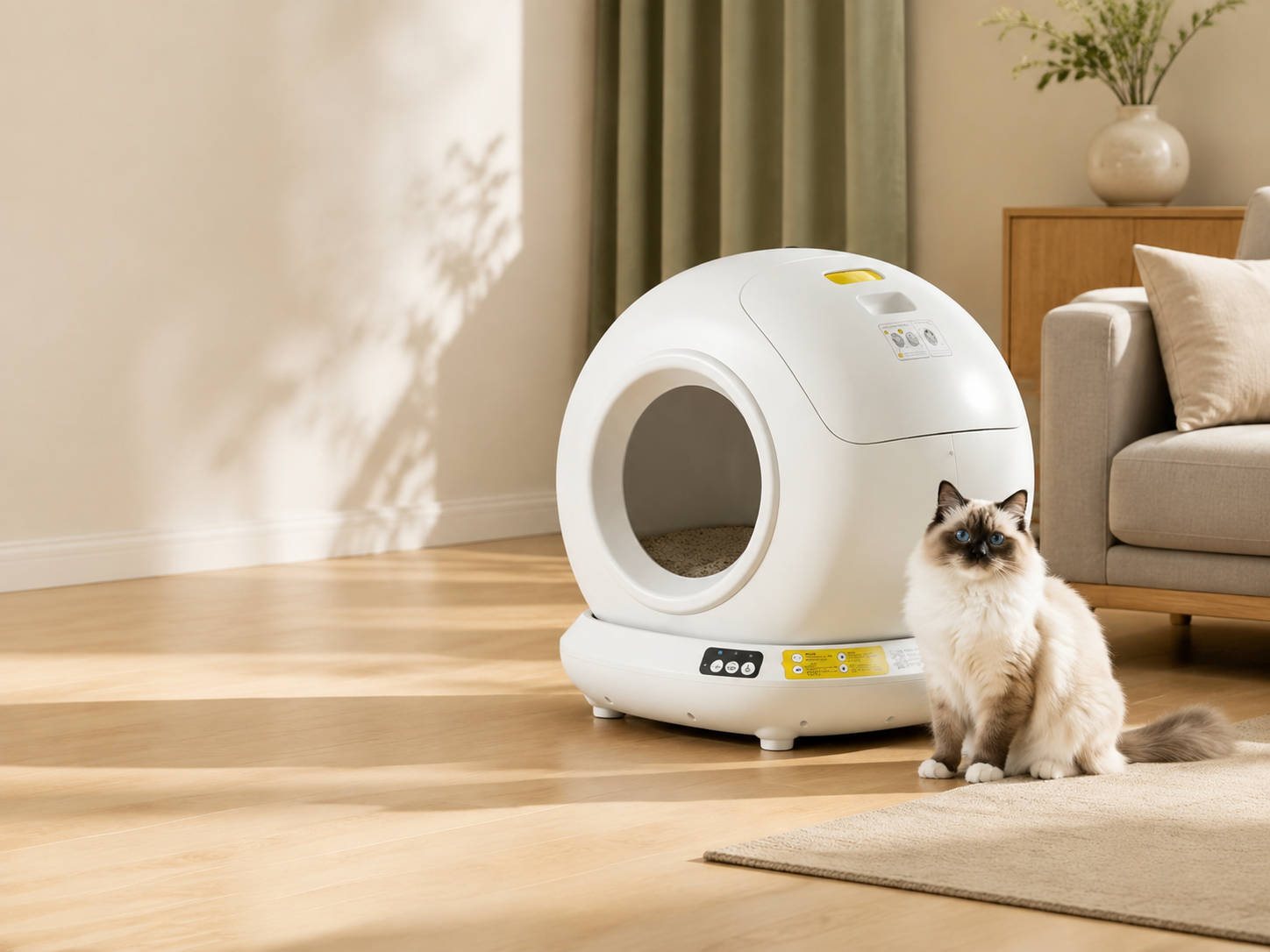
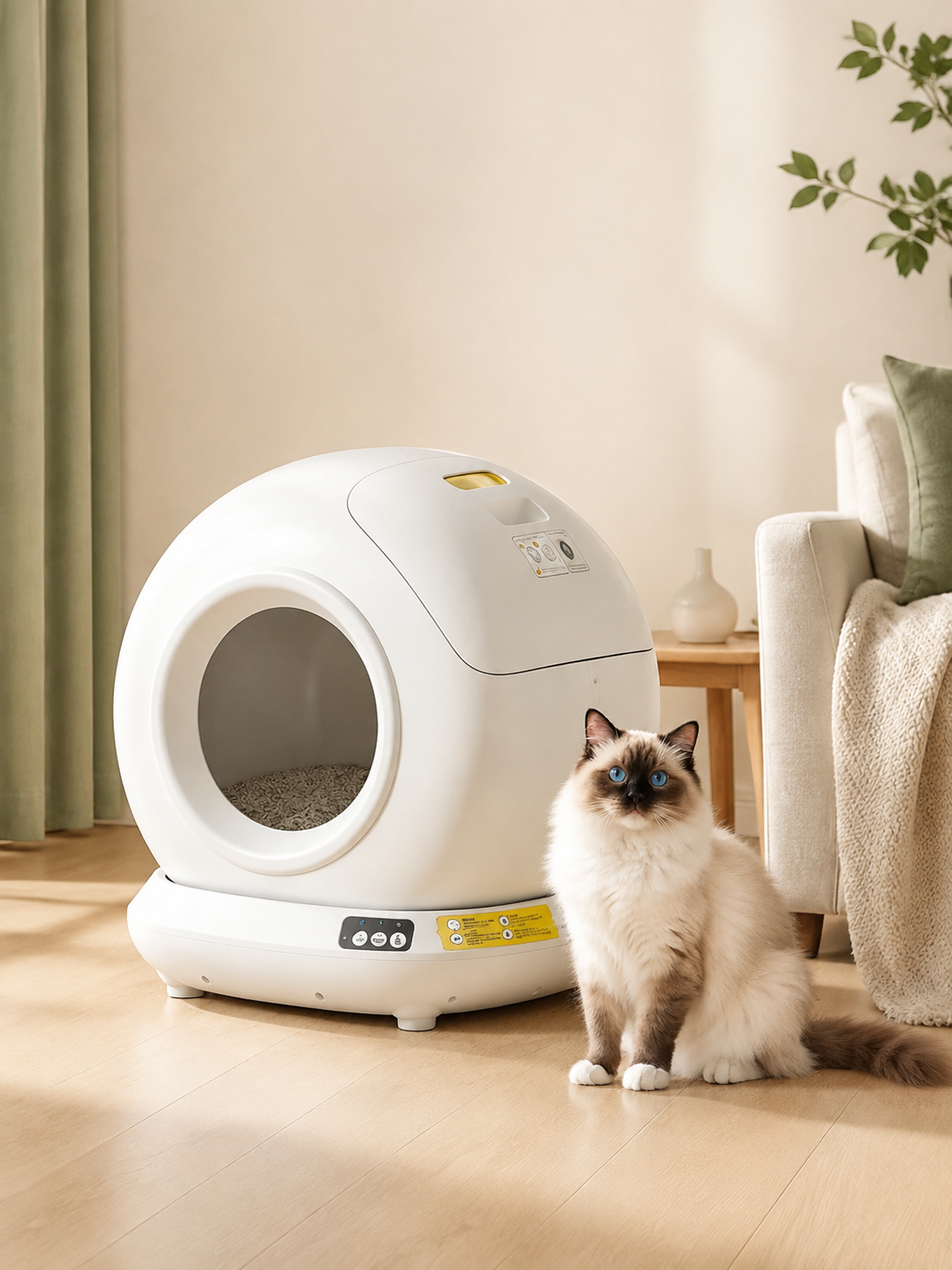
Automatic cleaning after use
120° radar, weight & anti-pinch
Secure checkout
Standard delivery 3–5 days
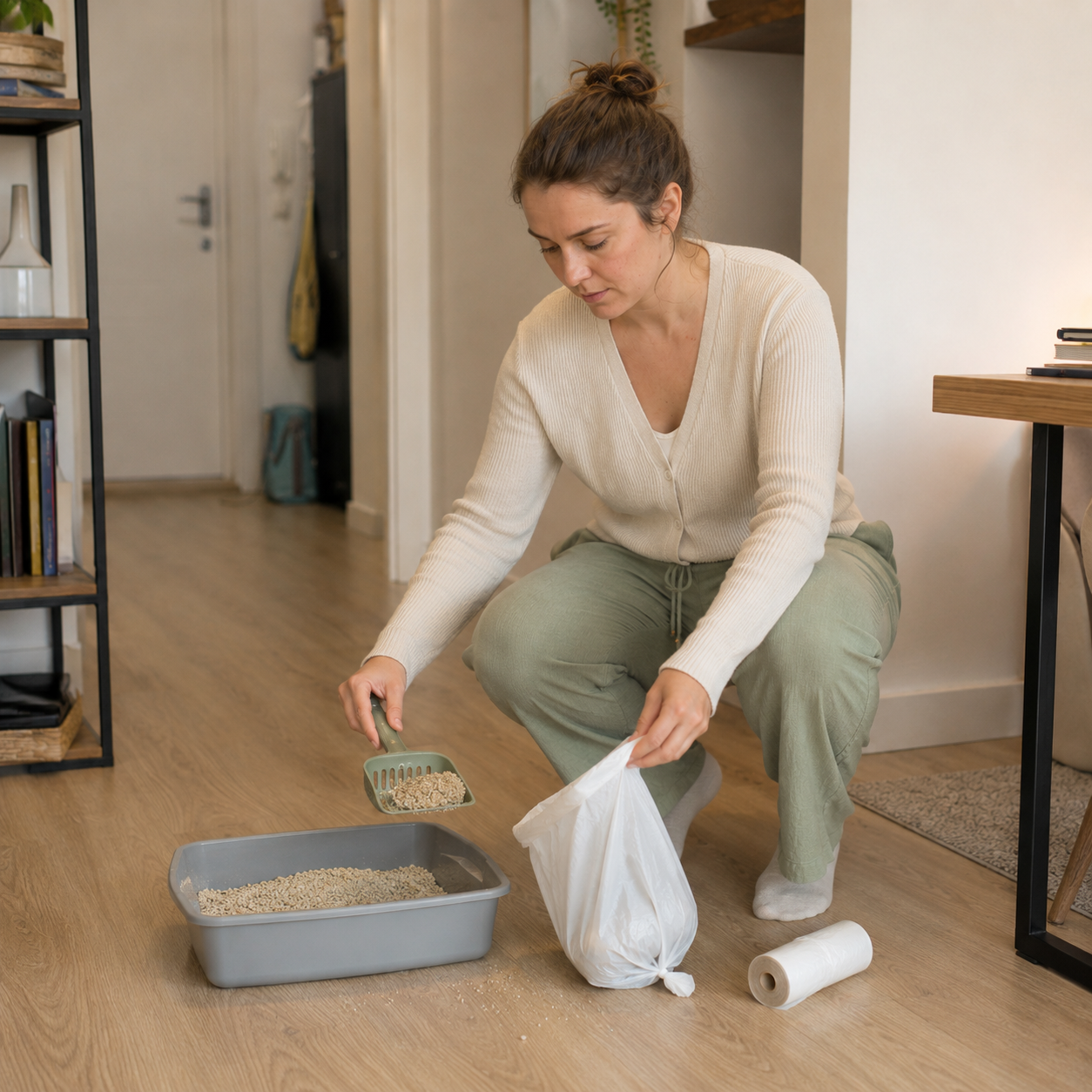
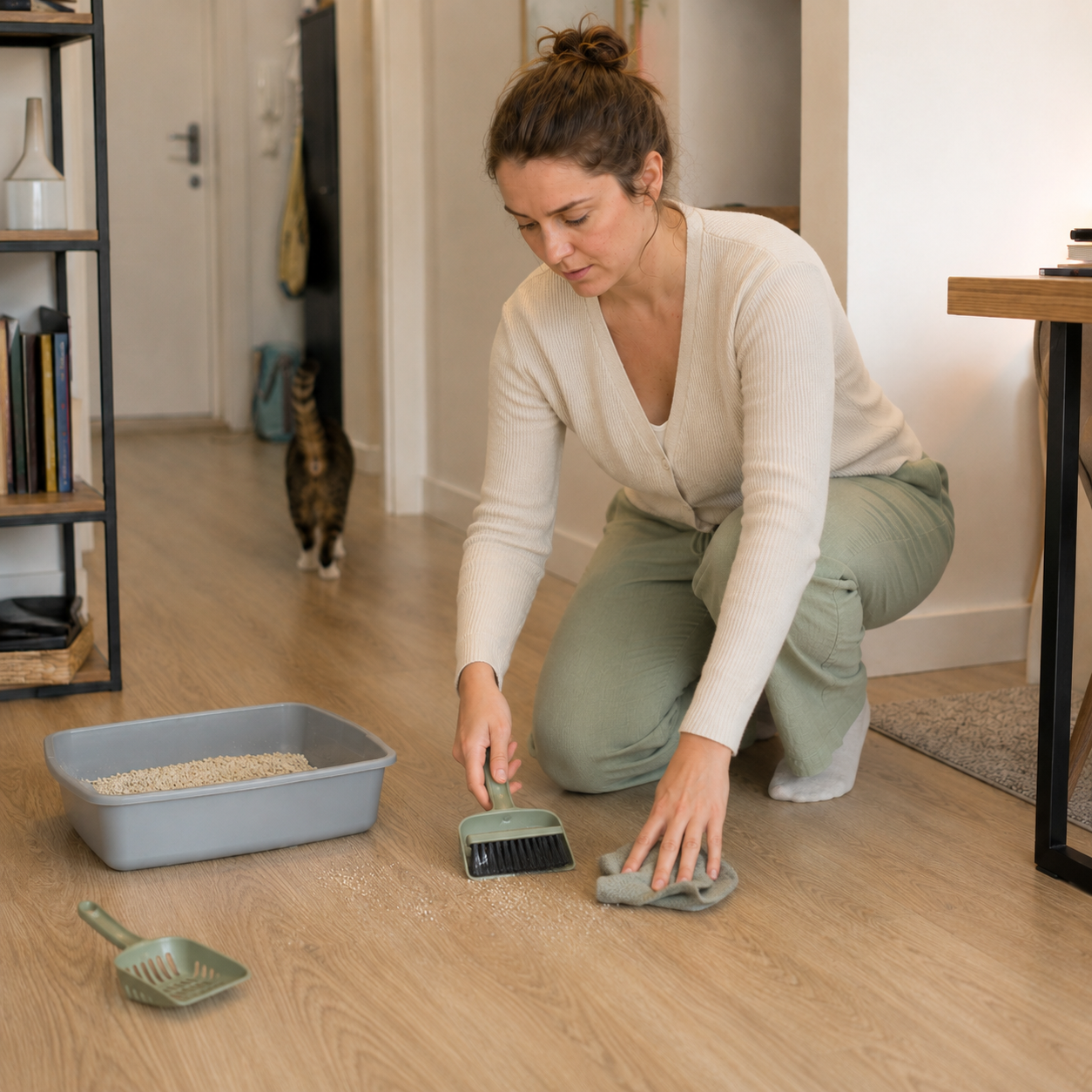
Your cat uses it. You clean it. Again and again.
Scooping is a small job with a big footprint on your week. It arrives at the wrong moment — before work, after a late shift, on the one evening you had plans. Miss a day and the box lets you know.
Daily scooping that slips down the list on busy days.
Odor that builds between cleanups, especially in smaller homes.
Bags, scoops and litter tracked across the floor.
More cats, more visits, more cleaning cycles per day.
None of that is a failure on your part. It's just a routine that can be simpler — and a box that can do most of the work itself.

Why PURRNEXA
A calmer litter routine, built around the cat
Six things we hold ourselves to. Where a detail depends on your unit, we point you to the instructions supplied with it rather than guessing on your behalf.
Automatic waste separation
Clumps are separated from clean litter after use, so the surface your cat steps onto stays tidier between visits.
Easier disposal
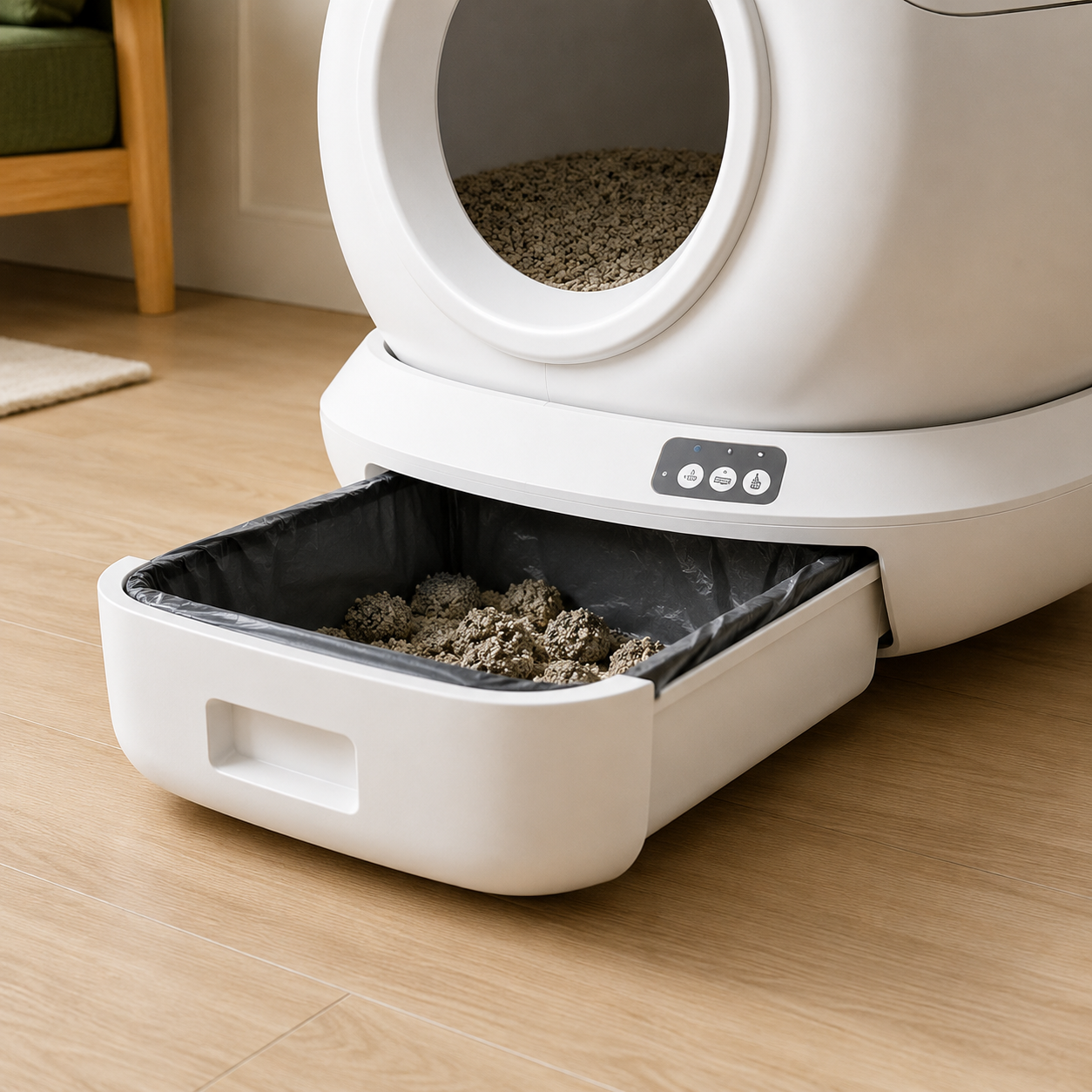
Waste collects in a drawer you remove and empty — no digging, no hunting for clumps with a scoop.
Cat-aware operation
120° radar sensing, weight detection and anti-paw-pinch structure pause the cycle when your cat approaches. Follow the supplied safety guidance in full.
Helps contain everyday odor
A 78 L fully enclosed chamber plus a closed waste drawer helps contain waste, everyday odor and litter scatter. Emptying on a regular rhythm does the rest.
A noise-reducing motor
The cycle runs on a noise-reducing motor. It isn't silent — no automatic box is — but it's built not to startle a sensitive cat.
Looks intentional at home
A quiet, considered shape in soft neutrals — an appliance you can place in a real room rather than hide away.
The product
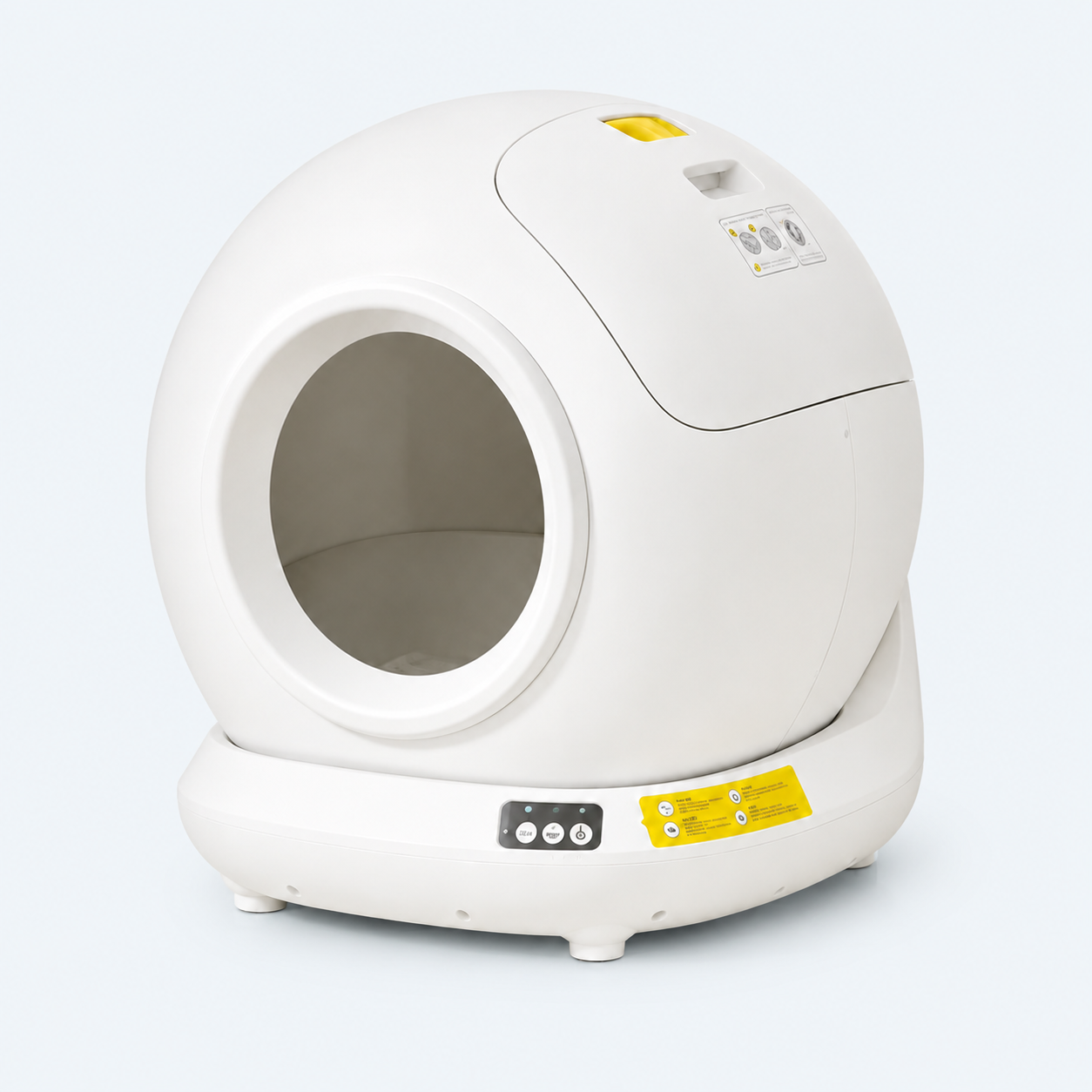
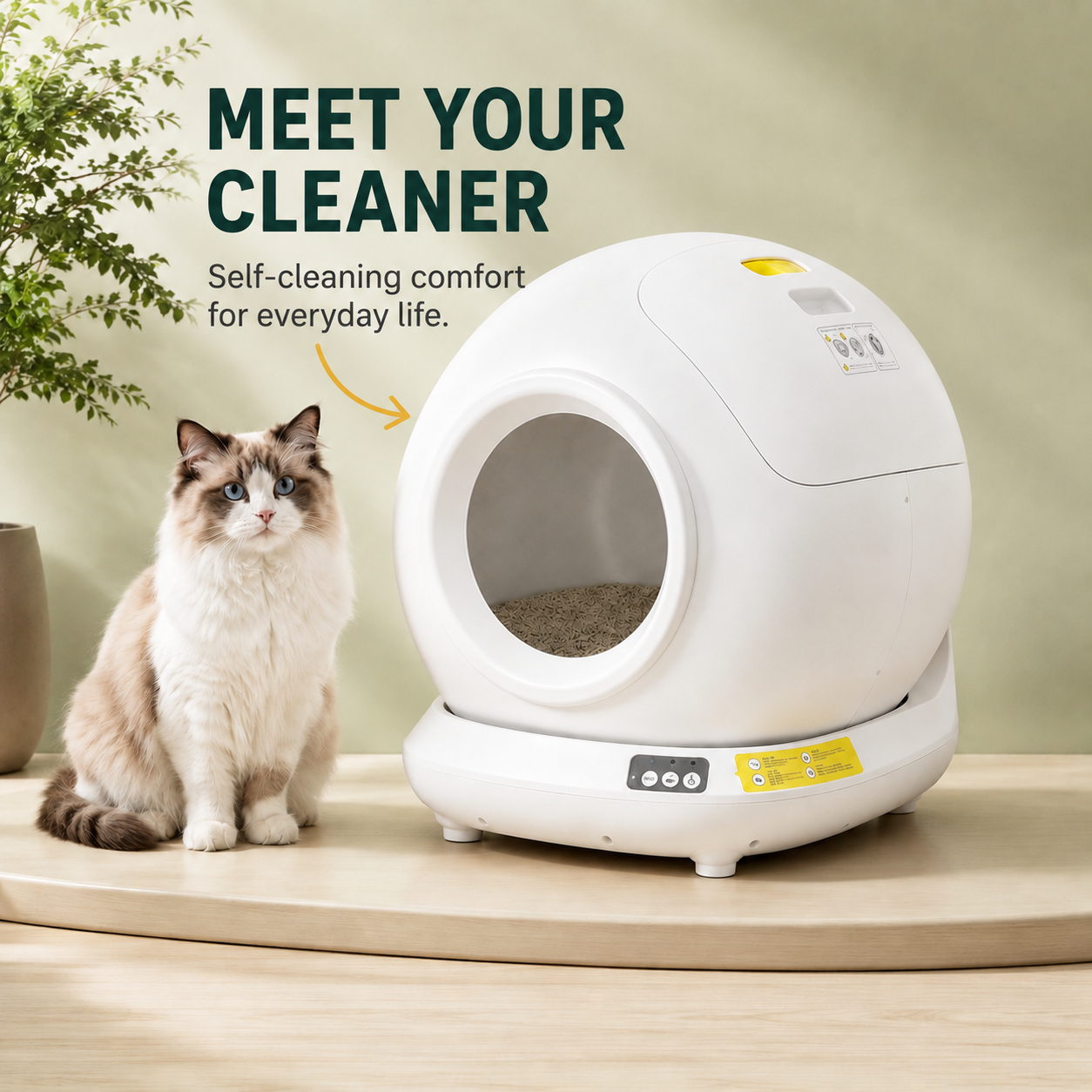
PURRNEXA Cat Litter Box
A 78 L fully enclosed chamber, automatic waste separation, tool-free detachable components and Tuya app control. Colours, current price and full specifications are on the product page.
- ✓ Separates clumps automatically after use
- ✓ Removable waste drawer for quick disposal
- ✓ Wipe-clean surfaces and removable components
- ✓ 19.69 × 19.69 × 20.87 in · 19.85 lb · ships to the United States
Two-box bundle: $409.99 — a further $29.99 off the pair, for multi-cat homes.
Full specifications
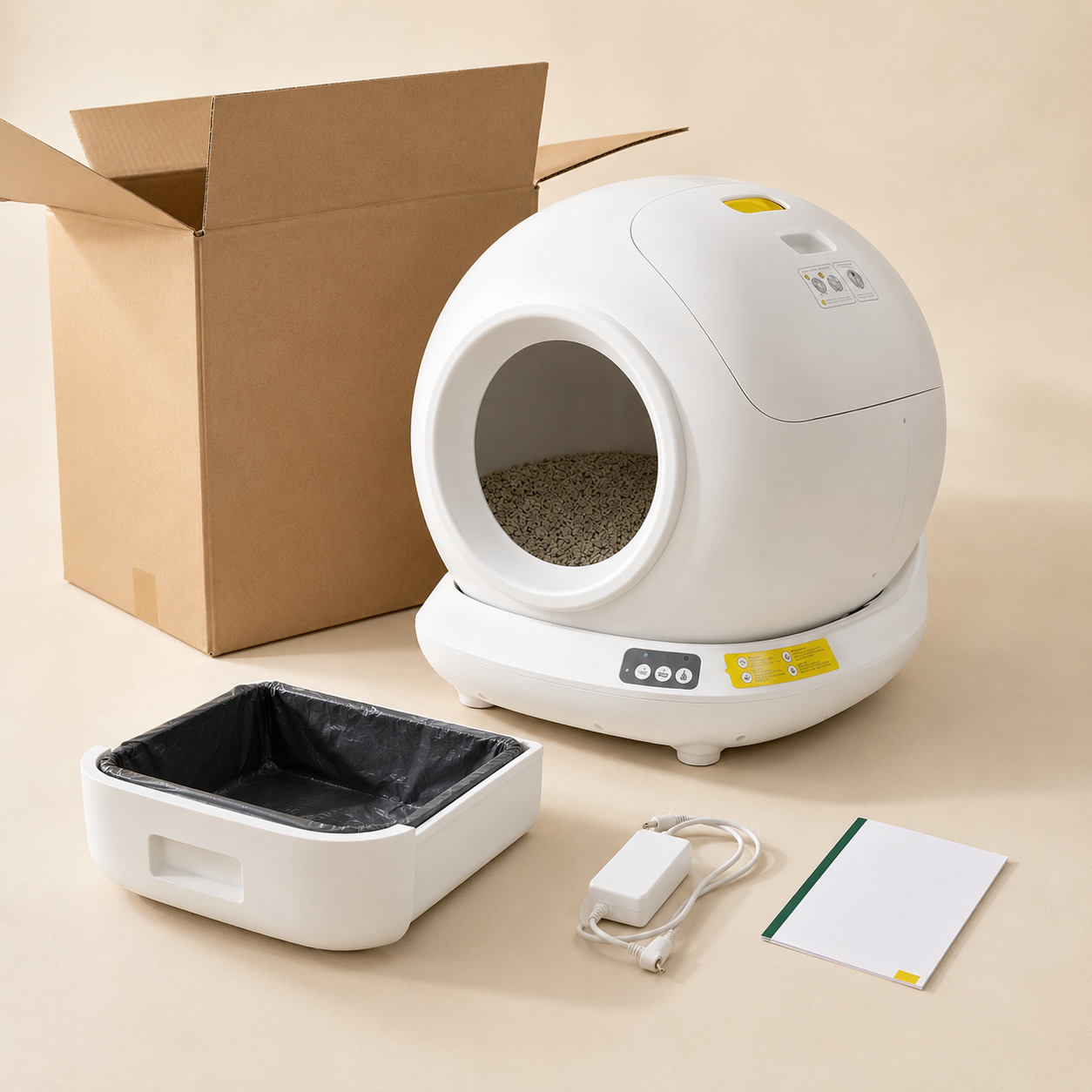
Shown on the product page so what you read is always the current, confirmed detail — including dimensions, power, included accessories and compatible litter types.
Standard delivery in 3–5 days. Shipping and returns follow our published store policy — linked in the footer.
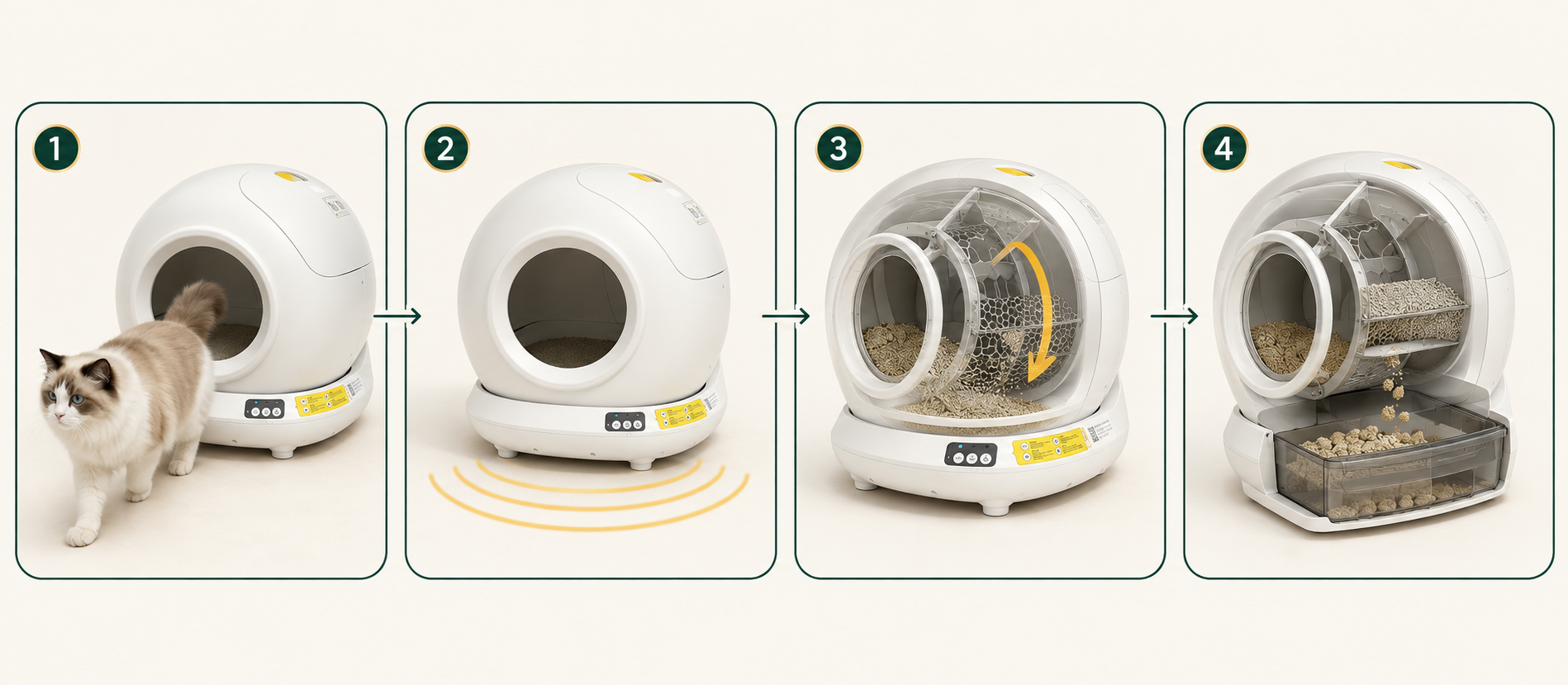
The clean cycle
How the automatic cleaning works
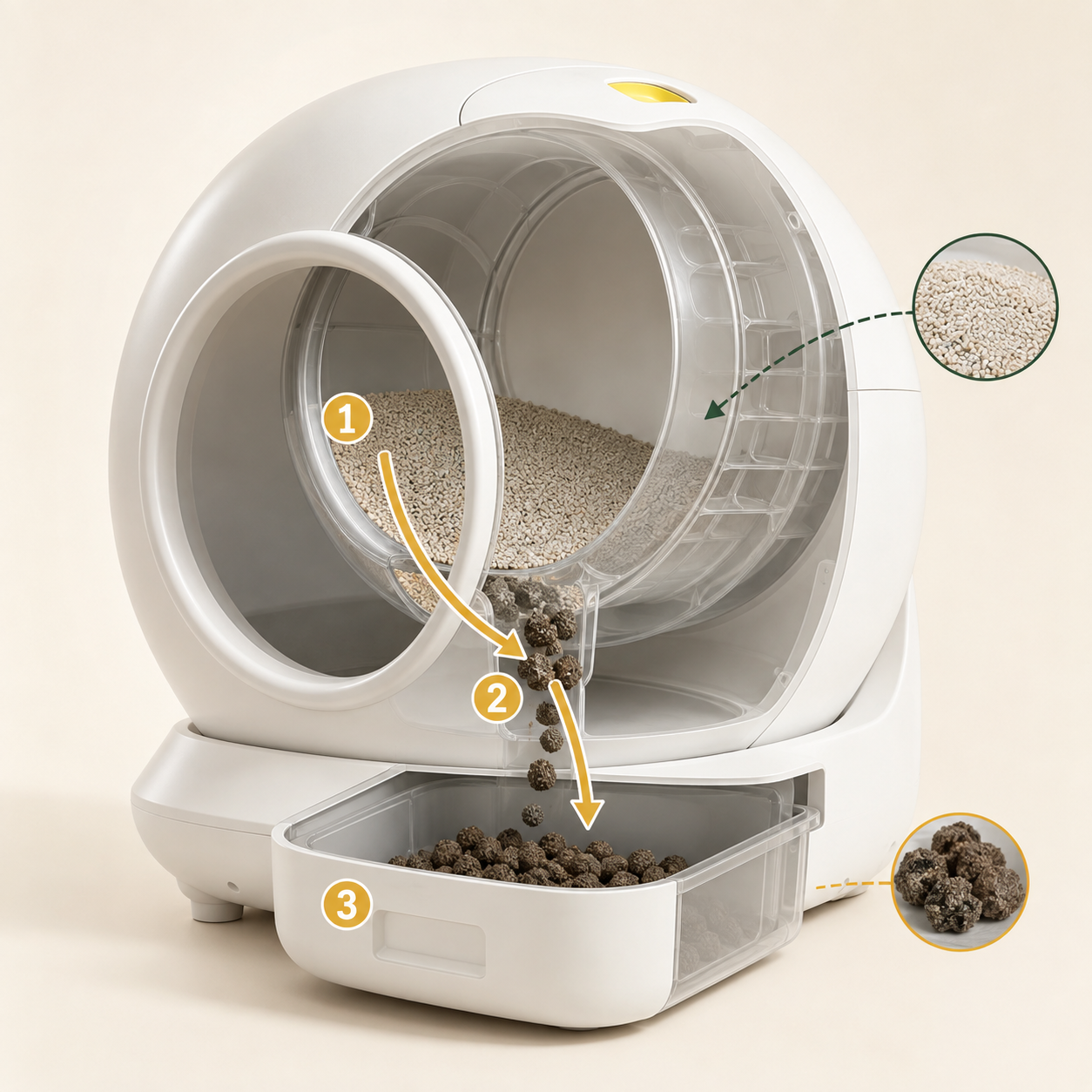
Four steps, one short cycle. Exact timings, sensor behaviour and cycle modes are described in the instructions supplied with your unit.
Your cat uses the box
Nothing to trigger and nothing to time. The box waits.
The unit detects the exit
120° radar sensing and weight detection register the visit, and the cycle begins once your cat has left.
Clumps are separated
Clean litter is returned to the bed; solids and clumps move on.
Waste lands in the drawer
You empty the drawer on a regular rhythm — that's the job.
Safety first
Safety before convenience
An automatic box only earns its place if you trust it around your cat. So here is how we talk about it: clearly, and without absolutes.
Cleaning is designed to run between visits
120° radar sensing, weight detection and an anti-paw-pinch structure pause operation the moment your cat approaches, and the cycle starts once they have left. Read the supplied instructions before first use.
Set it on a firm, level floor
Stable footing, clear space around the entry and a tidy power cable route. Keep the area free of anything that could block movement.
Supervise the first weeks
Watch how your cat approaches, enters and leaves. Every cat is an individual — some settle in a day, some need longer, and a few prefer a traditional box.
Follow the compatibility limits
Use it only with cats and litter types within the ranges stated in your unit's documentation. If your cat sits outside those ranges, a traditional box is the right choice.
We don't claim any automatic litter box is risk-free, and we won't tell you supervision is unnecessary. An appliance shares a room with an animal — attention still matters.
Odor & waste
Where the waste goes
The 78 L chamber is fully enclosed, and waste leaves the litter bed for a drawer you remove and empty. Together that helps contain waste, reduce everyday litter-box odor and keep litter scatter off the floor — it doesn't replace regular emptying, and no litter box makes a home odor-free.
Clumps are separated out of the litter bed during the cycle.
They collect in the closed waste drawer, away from the entry.
You slide the drawer out, empty it and refit it — a one-minute job.
Use only the liners, filters or deodorizing parts listed for your unit. Check the packaging for what's included.
How fresh a room stays depends on your home, ventilation, litter and how often the drawer is emptied — so we don't publish a number of "fresh days".
Cat comfort & fit
Designed around your cat's comfort
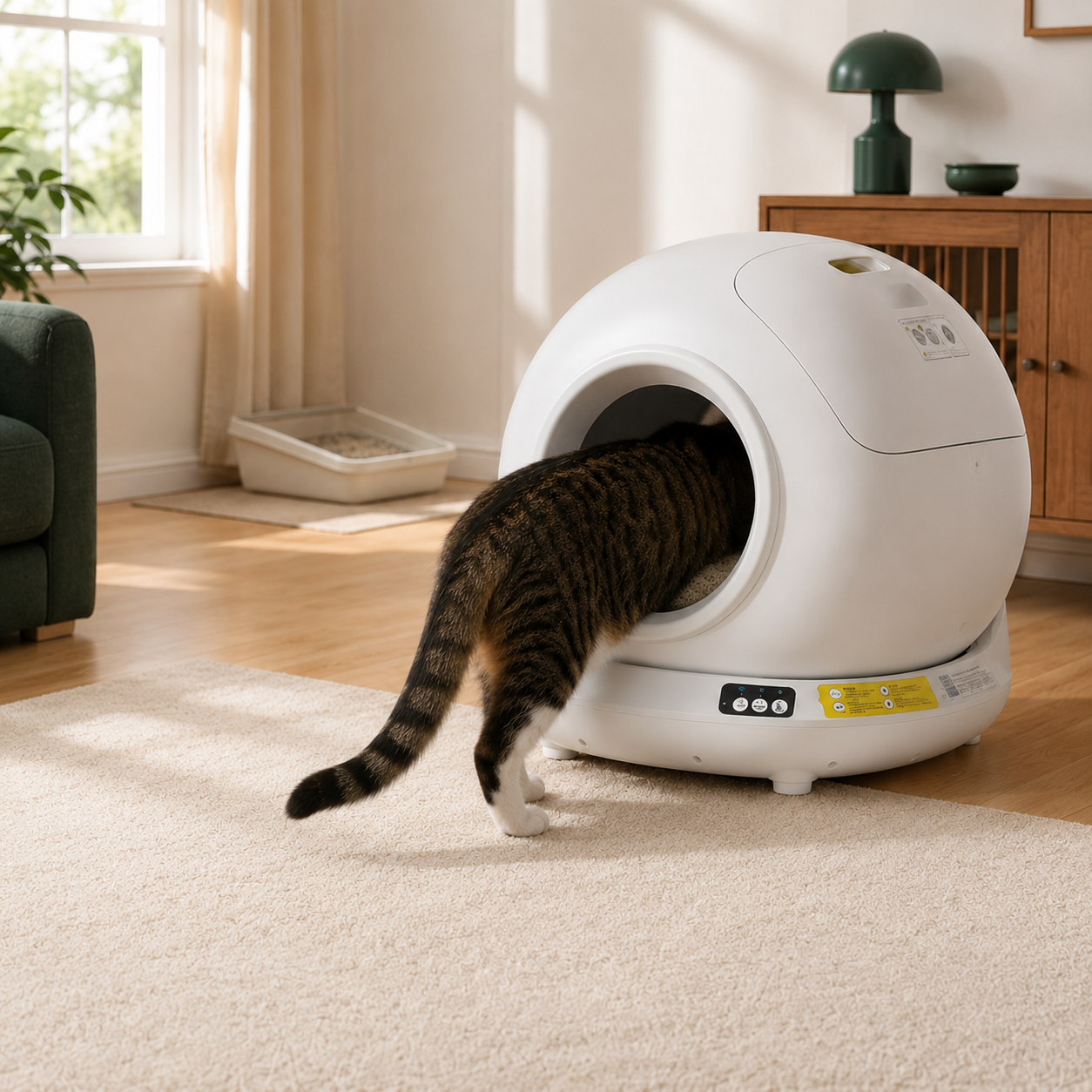
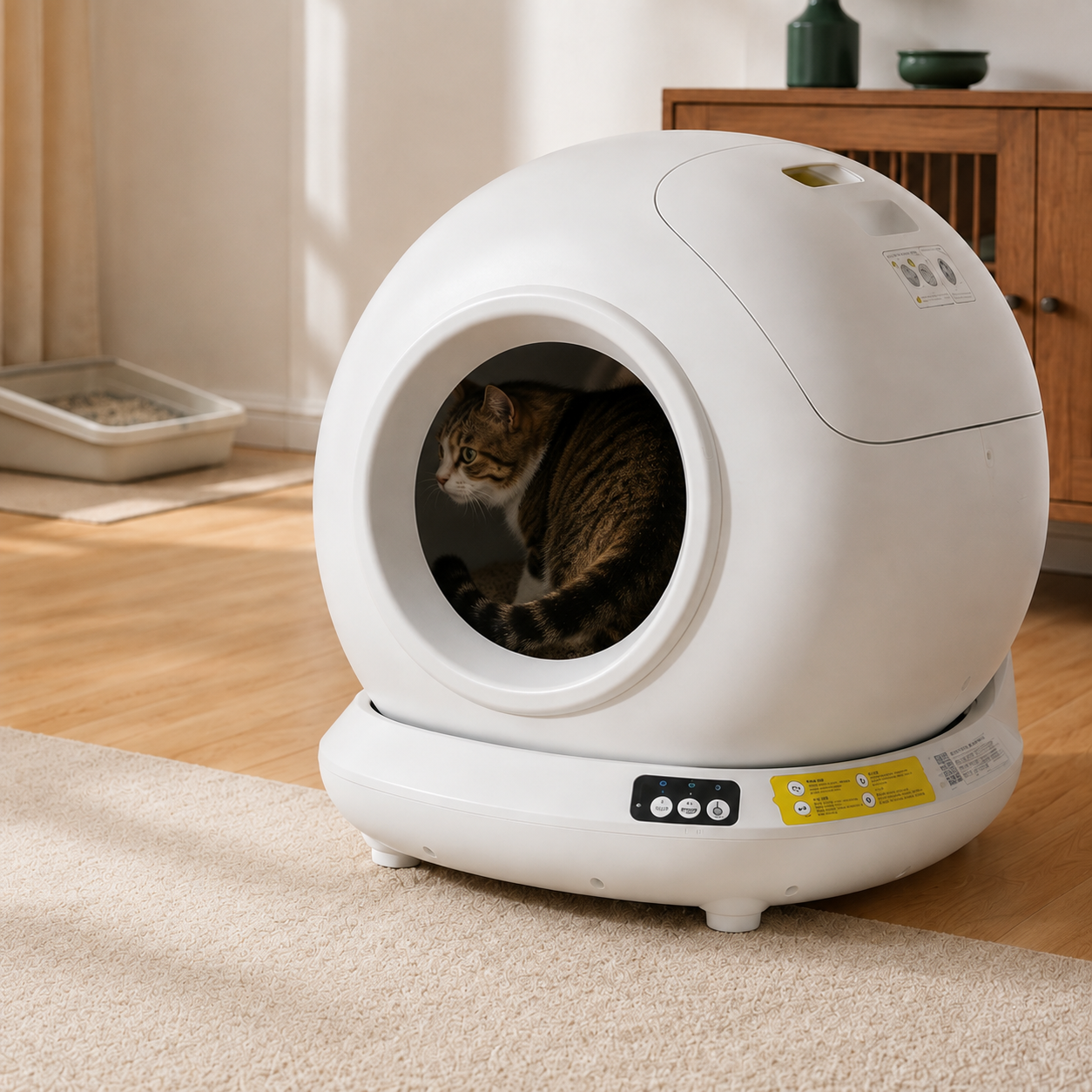
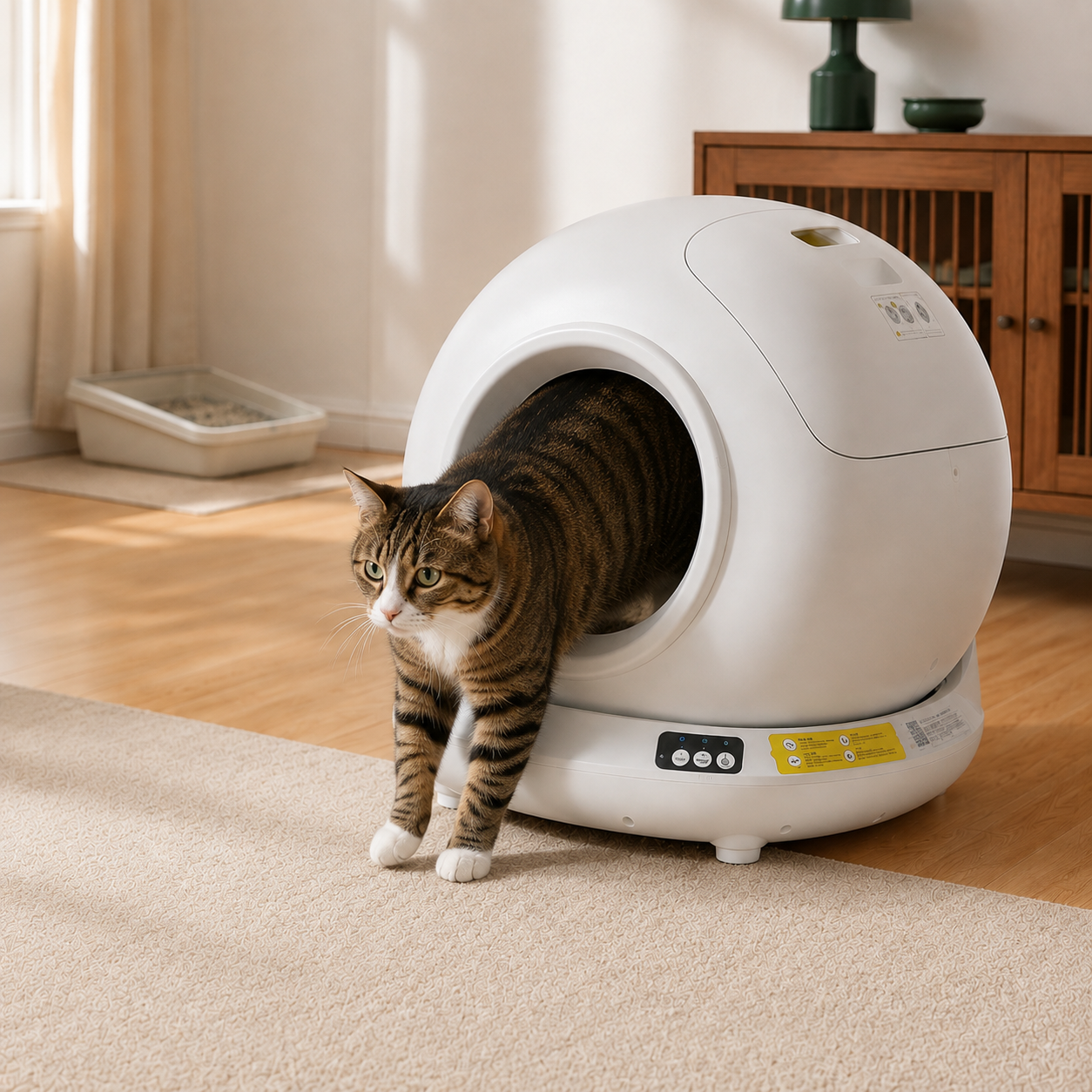
A 78 L fully enclosed chamber gives a private, unhurried space — room enough for larger cats and for multi-cat households. The unit measures 19.69 × 19.69 × 20.87 in and weighs 19.85 lb; the approved cat age and weight range is printed in the supplied specifications, so check it against your cat before you buy.
Start where the old box was
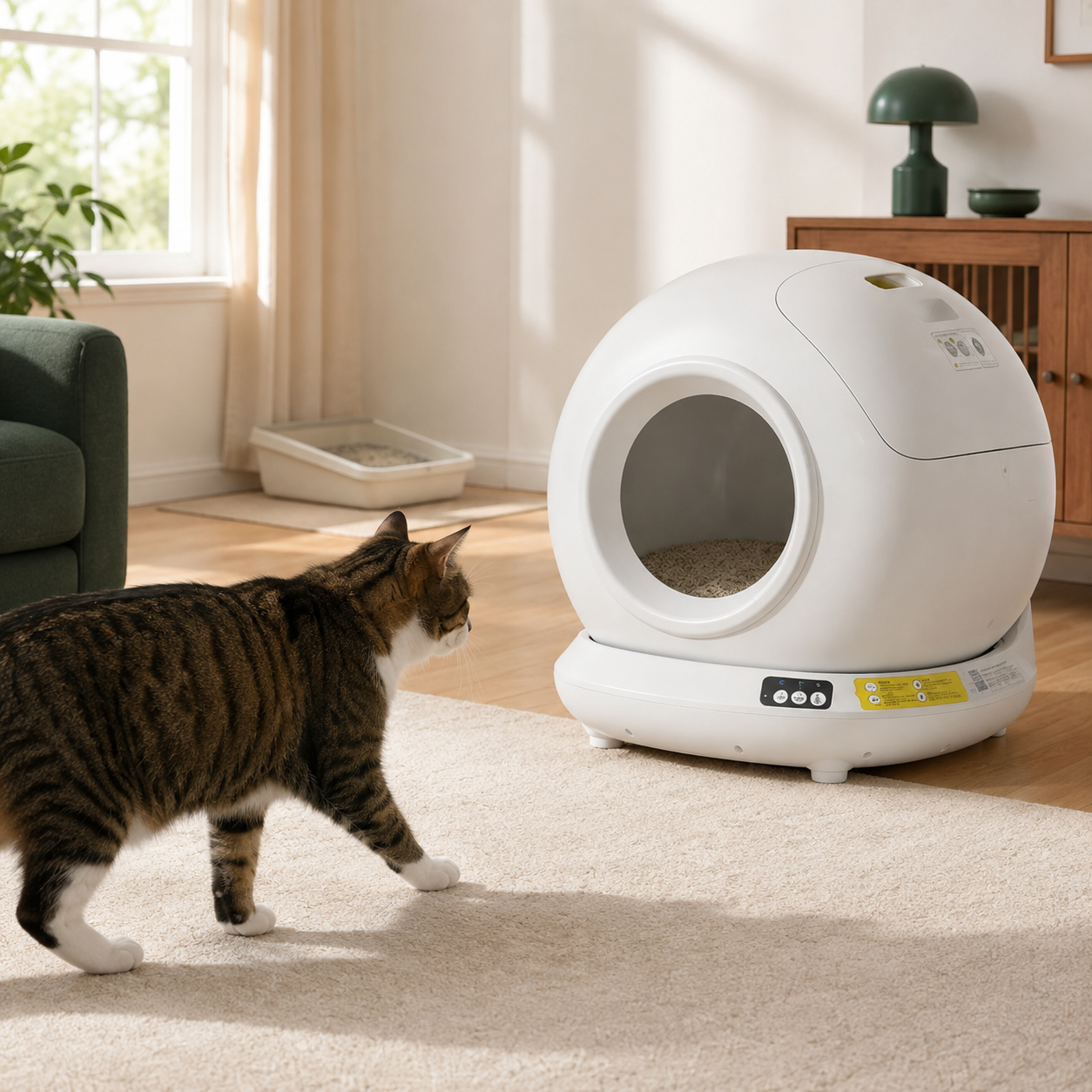
Place the new box beside the familiar one, in the same room, and leave both available.
Keep the familiar litter
Use a compatible litter your cat already knows. Change one thing at a time, never two.
Let them explore it first
If the supplied instructions allow it, begin unplugged so the box is simply a new place to dig.
Allow your cat time to adjust
Days, sometimes weeks. Retire the old box only once the new one is being used consistently.
Fits real homes
Where it lives in your home
Measure before you place it. Use the dimensions and clearance shown in your unit's specifications, and leave room for the drawer to slide fully out.
A small apartment
In a compact home, placement is about clearance rather than hiding the box. Keep the entry approachable, leave space for the waste drawer to slide fully out, and choose a spot away from where your cat eats and sleeps.
Check the unit's dimensions before you commit to a corner.
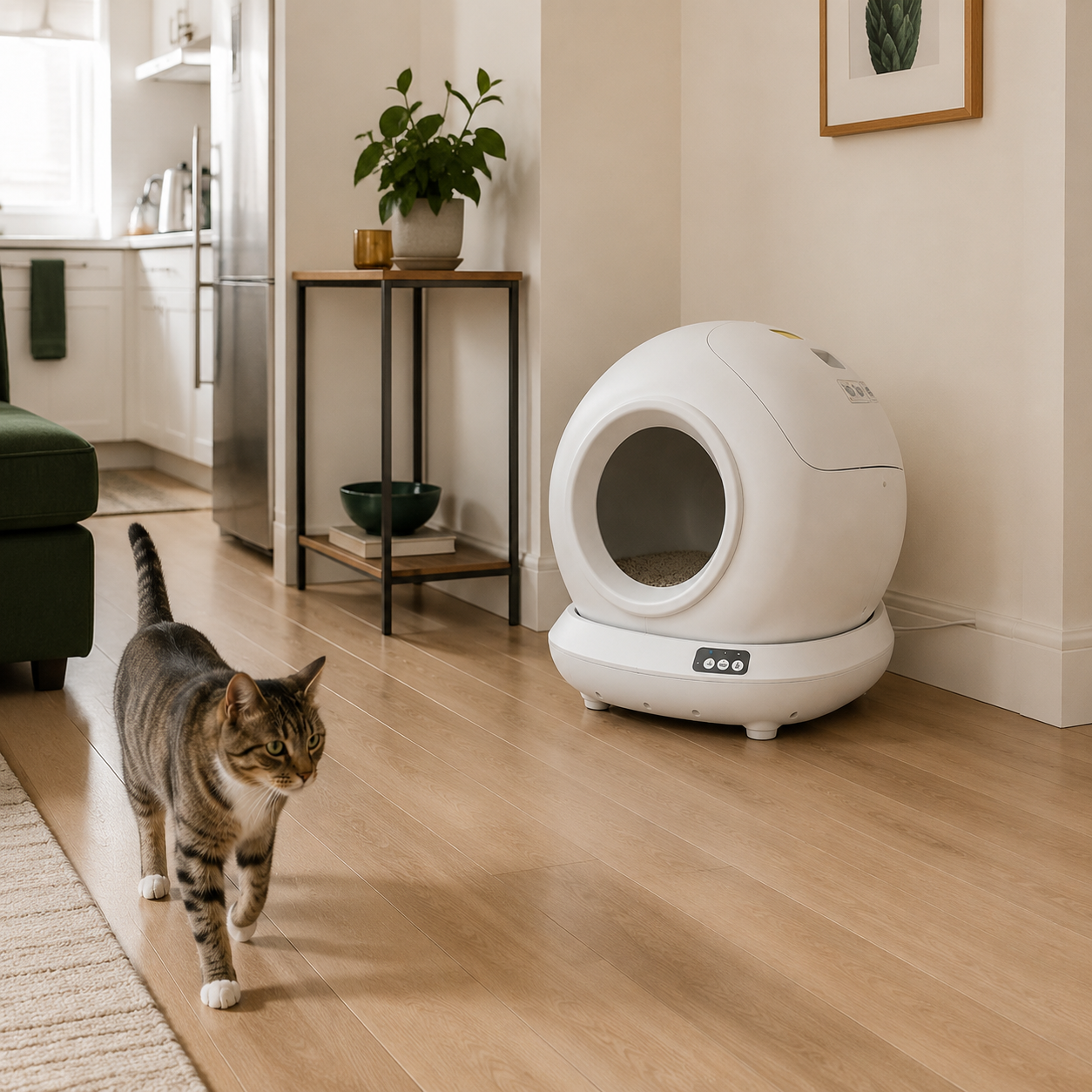
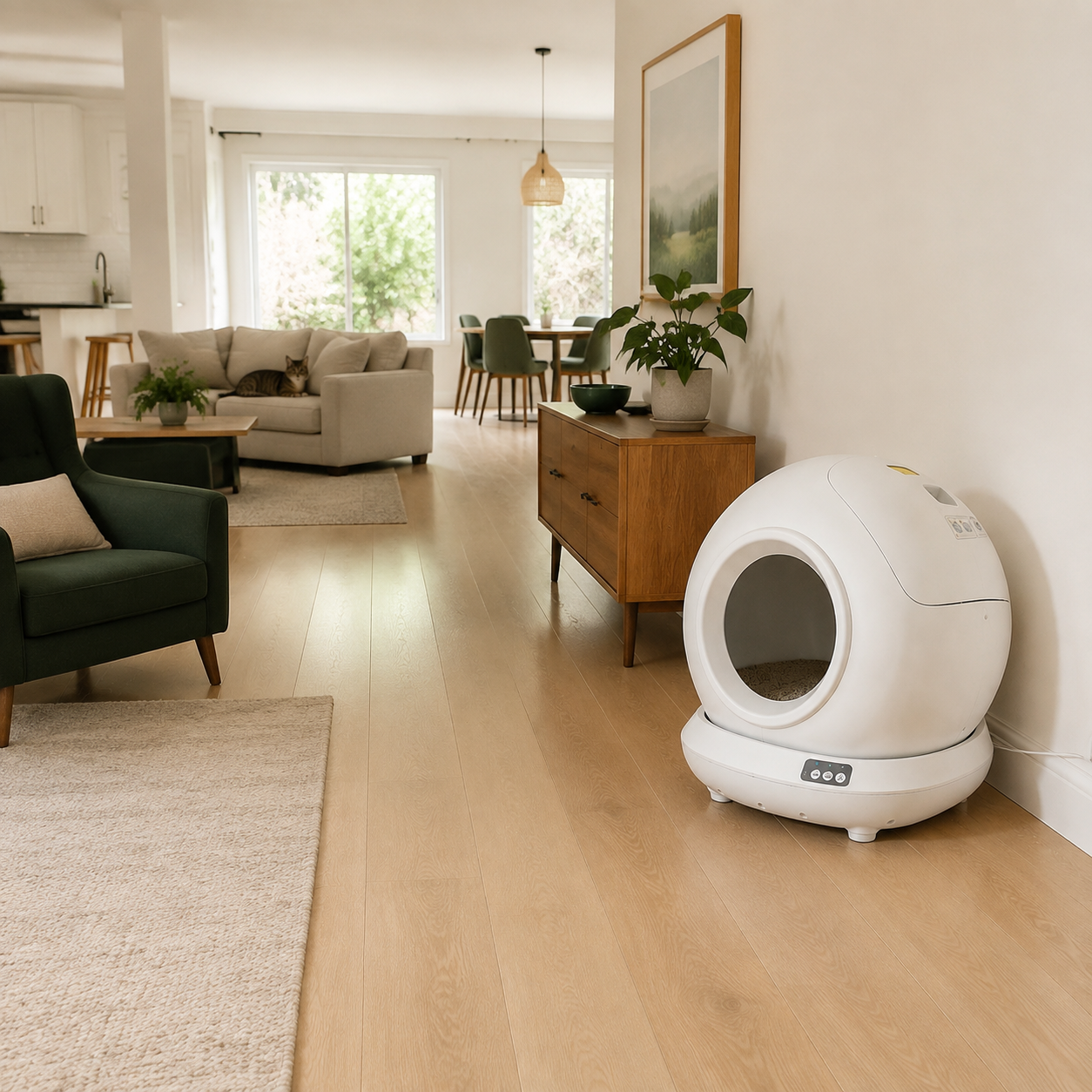
An open living room
Soft neutral surfaces and a quiet silhouette let the box sit in a shared room without dominating it. Give it a firm, level floor and a cable route that stays out of walkways.
Place it against a wall on hard flooring where litter is easy to sweep.
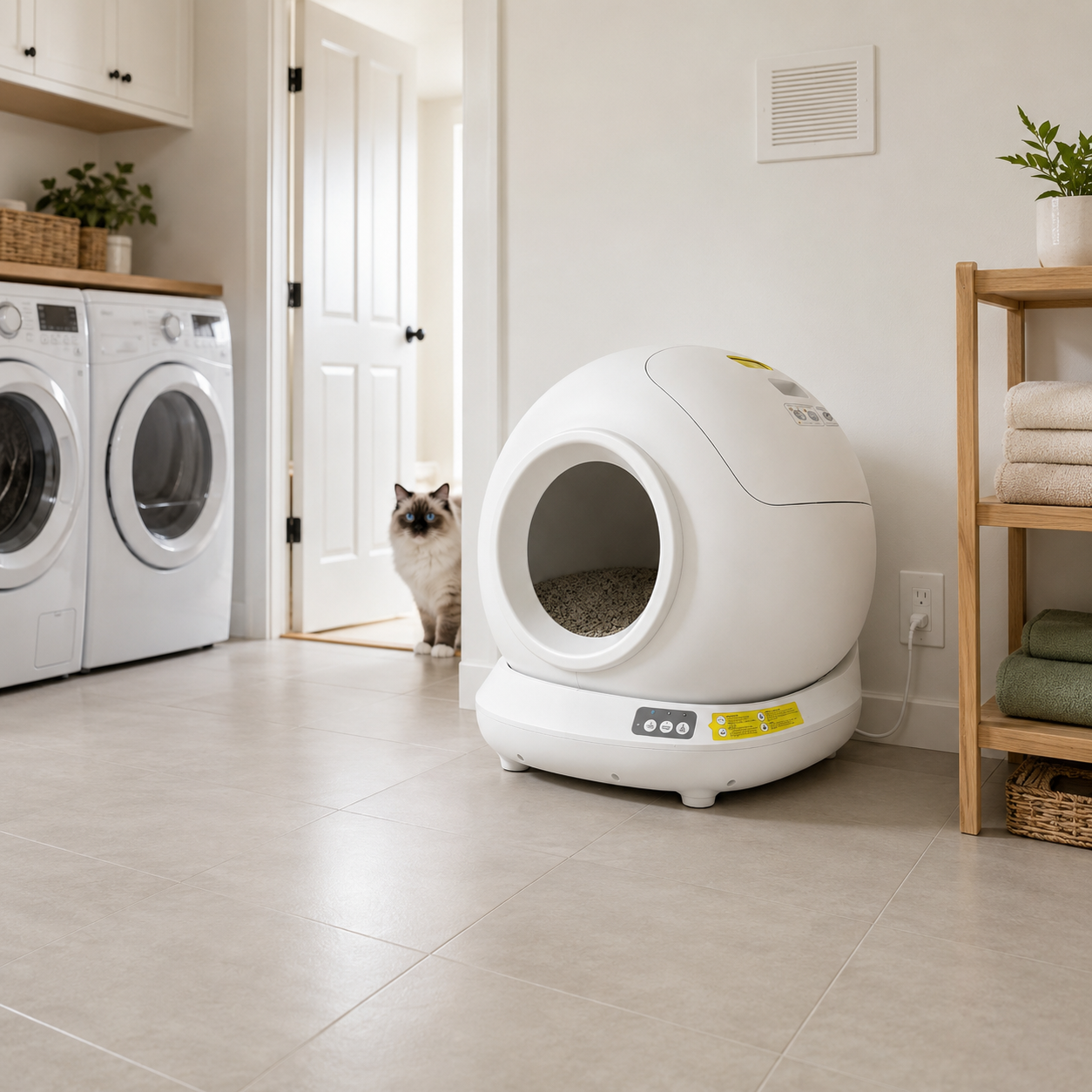
A laundry or utility room
A practical choice if the room stays accessible to your cat day and night. Ventilation helps, and a nearby socket means no extension leads across the floor.
Never place it behind a door that could be closed on your cat.
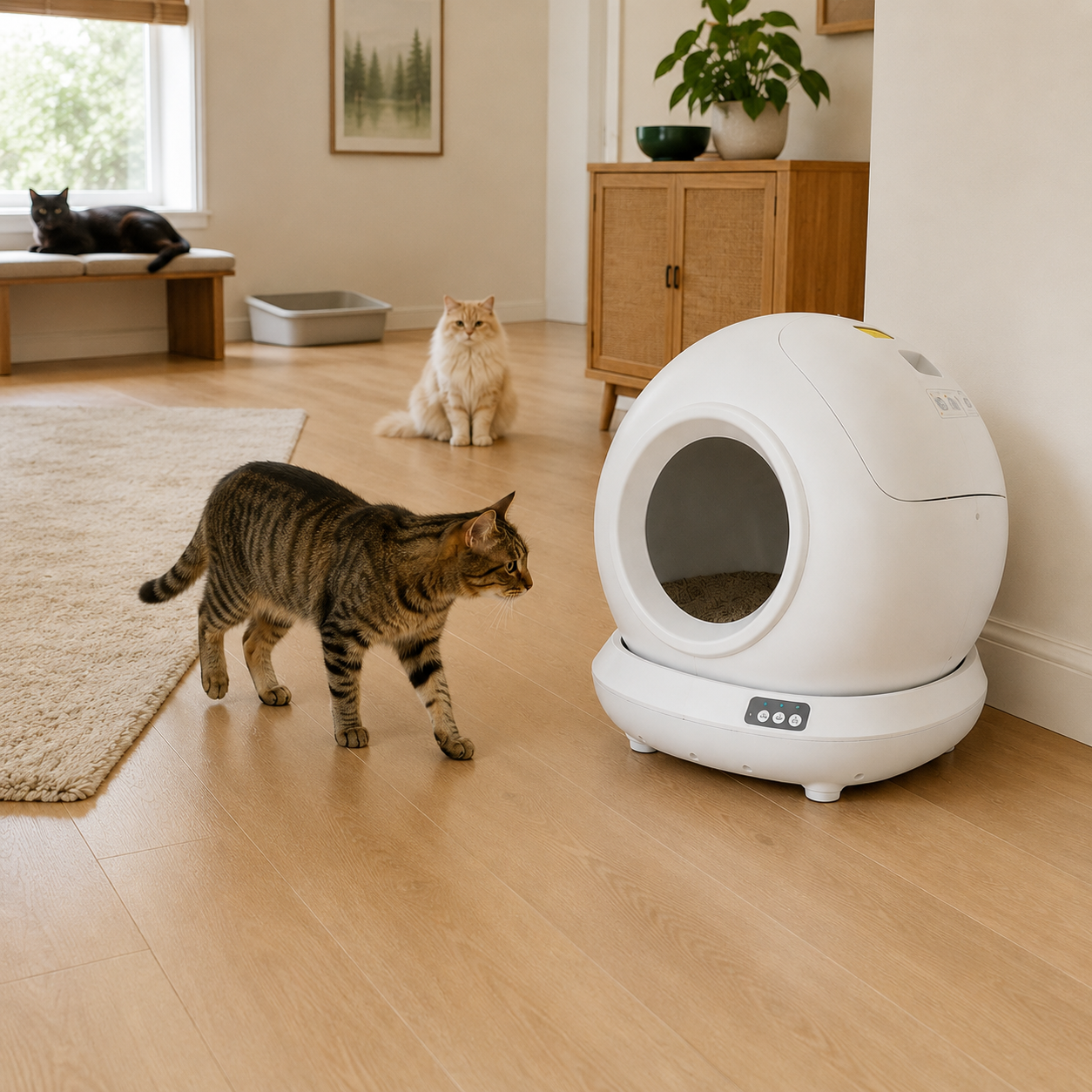
A multi-cat home
More cats means more visits, more cycles and a drawer that fills sooner. General multi-cat guidance is to keep more than one box available, whatever type they are.
Keep a familiar traditional box available during the transition.
Controls & app
Run it from the sofa, or from the office
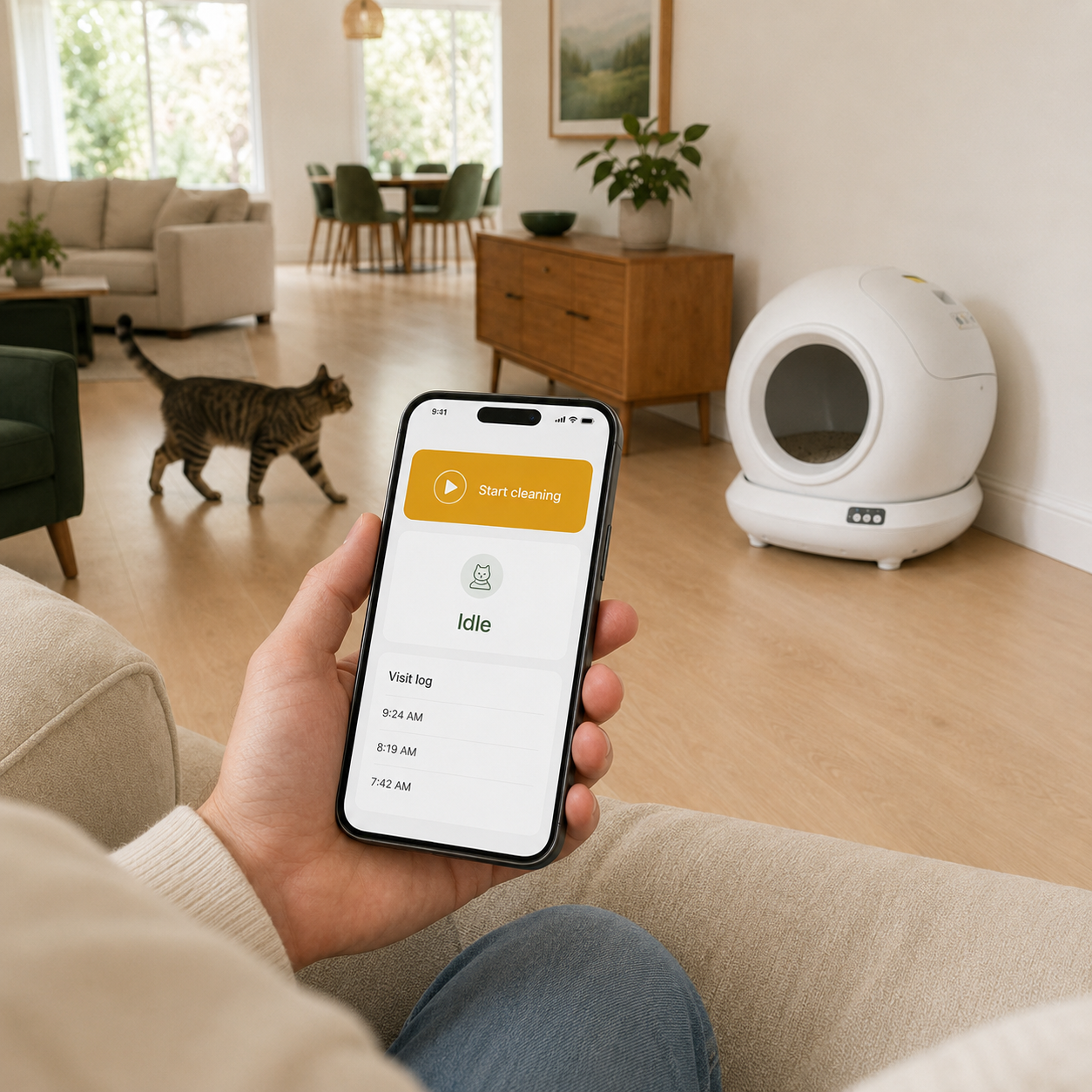
The box connects to the Tuya app, so the routine doesn't depend on you being in the room. Buttons on the unit do the same job when your phone is elsewhere.
One-click self-cleaning
Start a cycle on demand — before guests arrive, or after a heavy afternoon.
Remote status monitoring
Check what the box is doing from anywhere, on a network you already have at home.
A log of toilet visits
The app records how often the box is used, which is useful context to have in a household with cats.
A visit log is a record of frequency, not a diagnosis. This is a household appliance, not a health-monitoring or veterinary device — if something about your cat's habits concerns you, speak to your vet.
Maintenance
The work that's left
This is not a maintenance-free appliance, and we won't pretend otherwise. The routine is short — here is all of it.
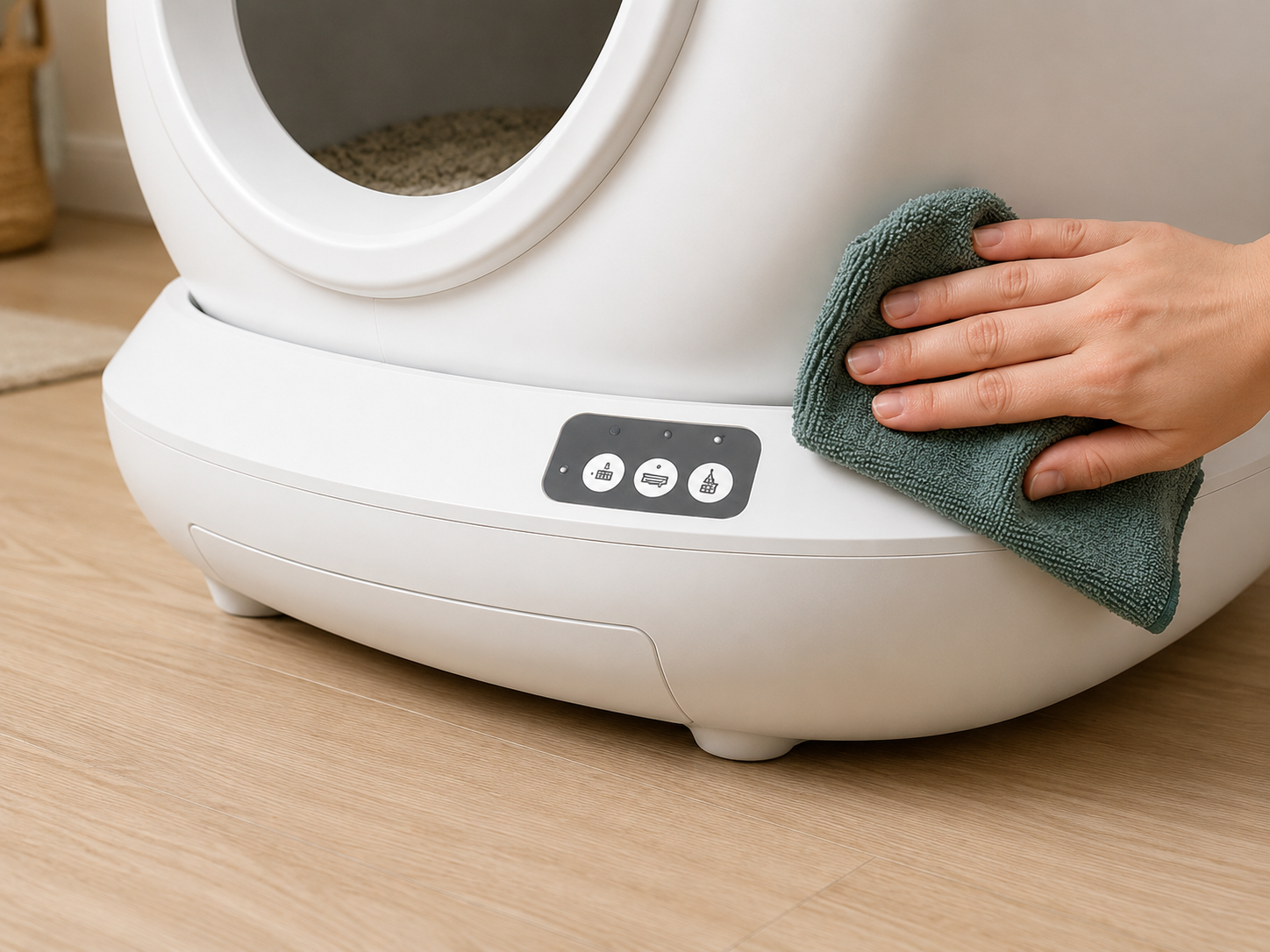
Empty the waste drawer
On a regular rhythm that suits your household and number of cats.
Replace the liner, if your unit uses one
Use only liners listed as compatible in your documentation.
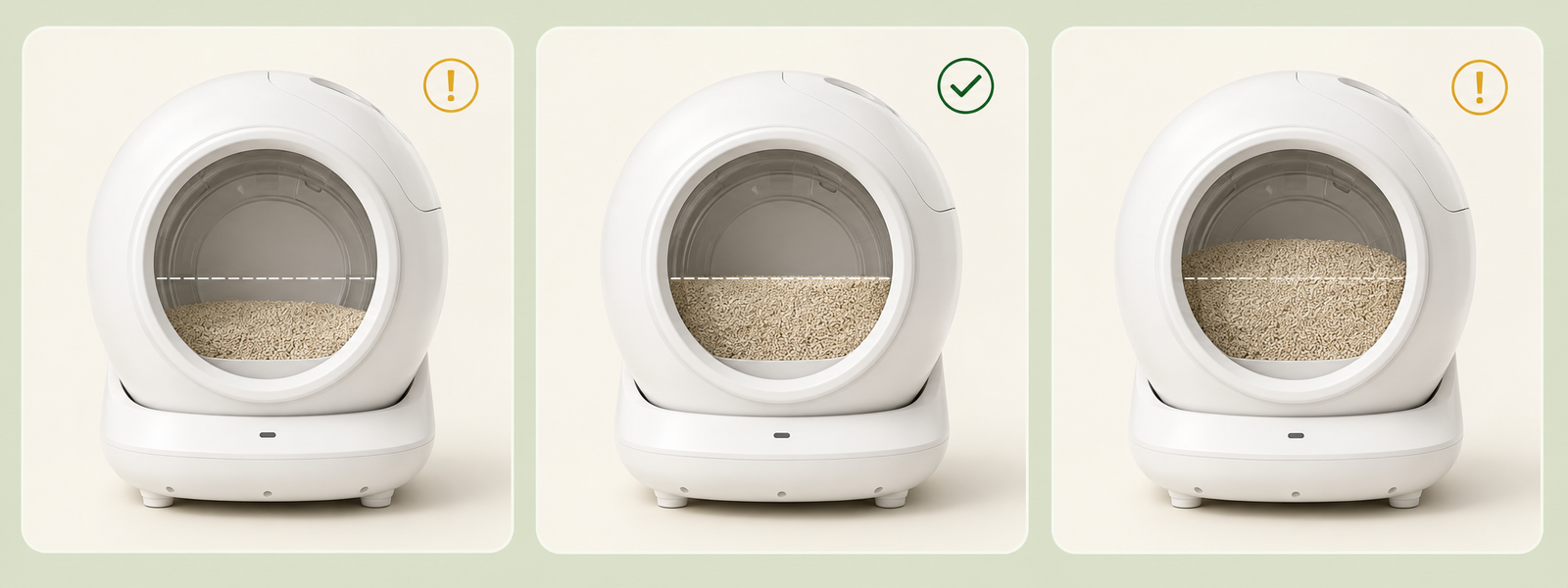
Top up the litter to the fill line
Keep the level at the marked line — over- and under-filling both affect the cycle.
Wipe down and periodically deep-clean
Follow the manual for which parts are removable, what water exposure is allowed and which cleaning agents to avoid. Always unplug first.
Litter compatibility
Compatible litter matters
An automatic cycle depends on the litter clumping and moving the way the unit expects. Your documentation lists the approved types, the particle guidance and the fill line — use it as the final word.
Use
- ✓ Litter types named as compatible in your unit's documentation
- ✓ A clumping litter your cat already accepts
- ✓ A level fill at the marked line, topped up after emptying
Avoid
- ✕ Any litter type your documentation lists as prohibited
- ✕ Mixing litter types mid-transition
- ✕ Overfilling above the fill line
Customer proof
Reviews, once they're real
No reviews published yet
We publish reviews only from verified PURRNEXA customers, in their own words. We don't write them, buy them, or borrow ratings from other listings — so this space stays empty until there is something genuine to show.
Bought one? Your review will appear here, photos included, exactly as you send it.
What we'll show
Verified customer reviews, customer photos, and a rating summary once enough have been collected.
What we won't
Invented names, star counts, sales figures, badges or before-and-after cleanliness claims.
Balanced comparison
Honest trade-offs
Three ways to handle a litter box. None of them wins on every line — including ours.
This litter box
Automatic separation
- Daily scooping
- Replaced by emptying the drawer
- Waste containment
- Collected in a closed drawer
- Setup
- Assembly, placement and a settling-in period
- Footprint
- Larger than a traditional tray — measure first
- Maintenance
- Short routine plus periodic deep-cleaning
- Upfront cost
- Higher than a tray; see the product page
- Cat transition
- Needed — allow time, and some cats decline
Traditional box
Manual tray
- Daily scooping
- Every day, by hand
- Waste containment
- Stays in the litter until removed
- Setup
- None — fill and place
- Footprint
- Smallest option
- Maintenance
- Simple, but constant
- Upfront cost
- Lowest
- Cat transition
- Usually none
Premium automatic alternatives
Connected appliances
- Daily scooping
- Also automated
- Waste containment
- Enclosed, often with consumables
- Setup
- Assembly plus network and account setup
- Footprint
- Typically large
- Maintenance
- Routine plus ongoing branded consumables
- Upfront cost
- Usually the highest
- Cat transition
- Needed, same as any automatic box
Generalised category comparison for orientation only. It doesn't describe any specific competing product, and we make no claim to savings we haven't measured.
Quality & support
Owning it, not just buying it
Materials, replaceable parts and consumables are listed on the product page. Everything ships with the printed setup and cleaning instructions, and our team answers questions about both.
Replaceable components
Parts and consumables listed for your unit stay available to reorder.
Instructions you can re-read
Setup, litter, safety and cleaning guidance, printed and online.
Human support
Questions about transition, litter or maintenance get a real answer from our team.
Policies as published
Shipping, returns and any warranty are exactly what our policy pages state — nothing extra implied here.
FAQs
Questions worth asking
Where an answer depends on your exact unit — dimensions, power, noise, capacity, controls, compatible cats and litter — we point you to the listing and manual instead of quoting a number we can't stand behind here.
How does the cleaning cycle start?+
Automatically, after your cat leaves the box. The exact detection and timing behaviour for your unit is described in the supplied operating instructions — read them before first use.
Is it safe for my cat?+
The cycle is designed to run between visits rather than during them, and the unit's documentation sets out its detection and pause behaviour. We don't claim any automatic box is risk-free: install it on a firm level floor, follow the supplied safety guidance, and supervise your cat during the first weeks.
Which cats is it suitable for? What about kittens?+
Only cats within the age and weight range stated in your unit's specifications. Very young kittens and cats below the stated minimum should use a traditional box until they're within range. If your cat is outside the range, or is unwell or unsteady, stay with a manual tray.
Which litter can I use?+
Use only the types listed as compatible in your documentation, filled to the marked line. Types listed as prohibited can affect the cycle or the mechanism — the litter guide in our footer walks through it.
How loud is it?+
It runs on a noise-reducing motor, so the cycle is quiet — but not silent, and no automatic litter box is. If your cat is very sound-sensitive, introduce the box gradually.
How often do I empty the waste drawer?+
It depends on how many cats use it and how often. Check it on a regular rhythm and empty it before it fills — the drawer capacity for your unit is listed in the specifications.
Will my home stop smelling of litter?+
Moving waste out of the litter bed into a closed drawer helps contain waste and reduce everyday litter-box odor. It isn't odor elimination, and results depend on your home, ventilation, litter and how often you empty the drawer.
Is there an app or Wi-Fi?+
Yes — it connects through the Tuya app for remote monitoring, one-click self-cleaning and a log of toilet visits. That log is a record of frequency, nothing more: it does not diagnose anything, and any concern about your cat's health belongs with your vet.
Can several cats share it?+
The 78 L enclosed chamber is sized with multi-cat households and larger cats in mind. More cats still means more cycles and a drawer that fills faster, and general guidance for multi-cat homes is to keep more than one box available regardless of type; any per-unit limit is in the specifications.
How do I move my cat over from the old box?+
Place it near the old box, keep the familiar compatible litter, begin unplugged if the instructions allow, and let your cat explore without pressure. Allow your cat time to adjust — days for some, weeks for others — and retire the old box only once the new one is in consistent use.
How do I clean it?+
Wipe down surfaces between drawer emptying, and deep-clean periodically. Always unplug first, and follow the manual for which parts are removable, what water exposure is permitted and which cleaning agents to avoid.
Dimensions, clearance and power?+
19.69 × 19.69 × 20.87 in and 19.85 lb. Allow clearance in front of the entry and enough room to slide the waste drawer fully out, and route the cable where it won't be walked on. Power requirements are listed in the supplied specifications.
Shipping, returns and warranty?+
Standard delivery is 3–5 days within the United States. Returns and any warranty are exactly as set out on our shipping, returns and warranty pages — linked in the footer. We don't advertise a trial period, guarantee or delivery promise here that isn't in those published policies.
Ready to retire the daily scoop?
Discover a cleaner, more manageable litter routine built around your cat's comfort and your real life.